AI answers can vary by prompt, model, time, location, and interface. A useful measurement program makes those conditions explicit and reports what it sampled. It does not pretend that a handful of answers represents every user’s experience.
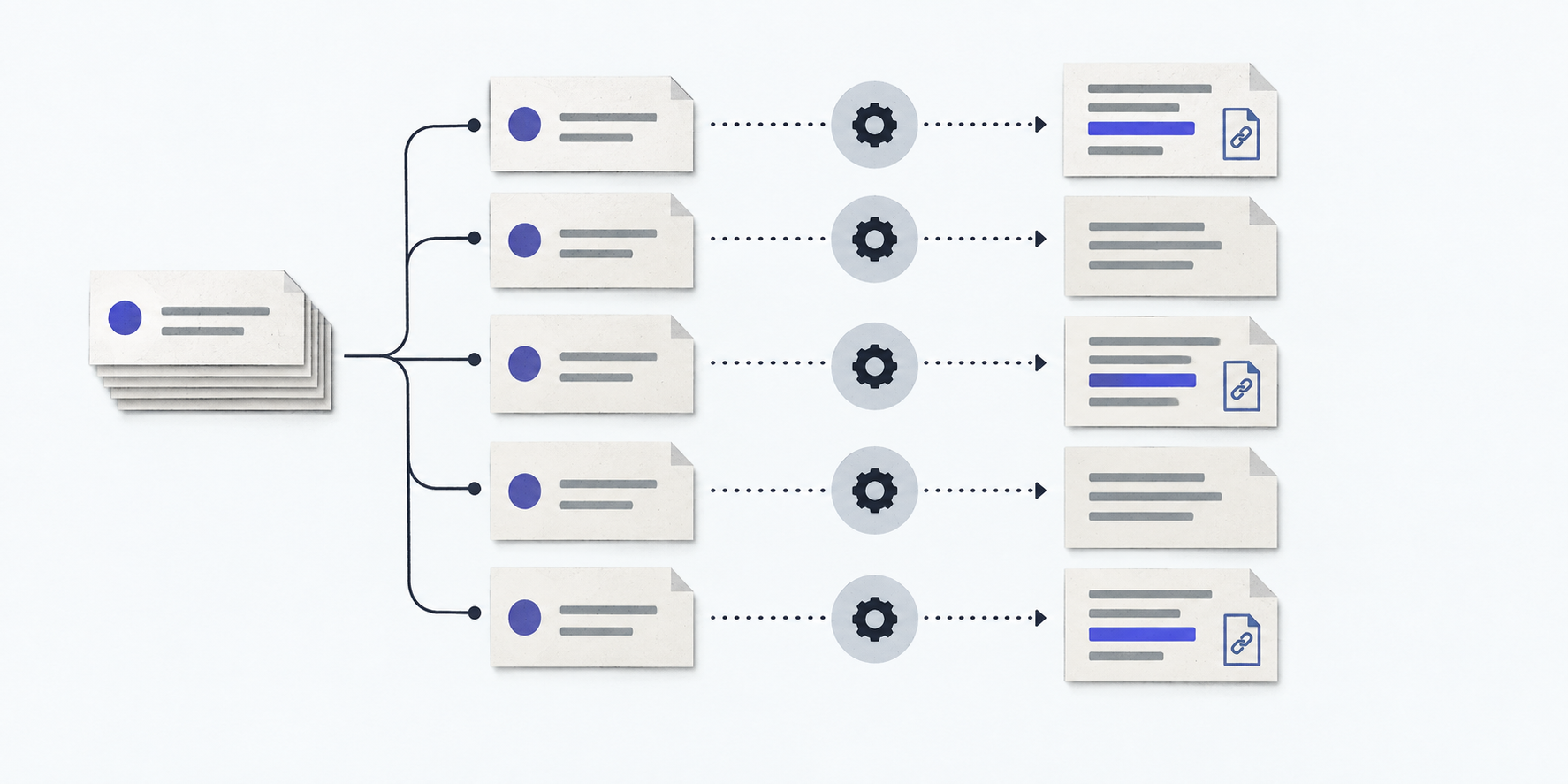
Step 1: Decide what you want to learn
Choose a decision first: whether your brand appears for a product category, whether a specific page is cited, how you compare with a defined peer set, or whether AI search activity reaches your site. Each question needs a different observation method.
Step 2: Build a prompt set
Use real customer questions and group them by intent, such as discovering options, comparing providers, evaluating a product, and asking for implementation advice. Record exact wording and market context. Keep branded prompts separate from non-branded prompts.
Step 3: Define the observation
- Mention: the brand name appears in the answer text.
- Citation: the platform links to a source. Record the cited URL and publisher.
- Recommendation: the answer explicitly proposes the brand as an option.
- Visit: a measured visit reaches your site from an AI-related source, where analytics can identify it.
- Vendor score: a provider-defined metric whose formula, data source, and denominator must be documented.
Step 4: Sample consistently
Choose the products or surfaces that matter to your audience. Run the same prompts on a stated schedule, note location and account conditions where relevant, preserve answer examples, and record model or interface changes. Repeated samples help reveal variability; they do not remove it.
Step 5: Report denominators and limits
For example, report ‘brand mentioned in 7 of 30 sampled answers across these prompts and dates.’ Do not simply call the result a 23% universal AI visibility rate. Name the sample, prompt set, dates, platforms, and rules for multi-brand answers. Keep mention share and citation share separate.
Use first-party reports as a separate layer
Google Search Console and Bing Webmaster Tools can provide first-party activity signals for their own AI search experiences. These reports answer different questions from manual or vendor-run prompt sampling, and should not be merged without a clear definition.
Where monitoring tools fit
A monitoring platform can automate repeated checks, organize answers, and help compare trends. Before choosing one, inspect how it selects prompts, obtains answers, refreshes results, handles variability, defines citations, and estimates visibility. Different vendors’ scores may not be comparable.
Compare platforms and tool categories
Primary sources
Google: Gen AI performance reports in Search Console